Tag: Almond Bloom

  • Jumpstart your Growing Season with Redox during Bloom and Post-Bloom

    —Sponsored Content—

    Bloom is upon us and it is time to pick a quality product to increase crop set. Nutrition decisions made now will have a major impact on your yield and quality during harvest.

    Redox Bio-Nutrients technology has been specially formulated with Redox Active Molecules (RAM), to keep plants in balance, allowing them to increase yield. When plants are balanced, they focus on reproductive and vegetative processes.

    Here are specific ways Redox can help:

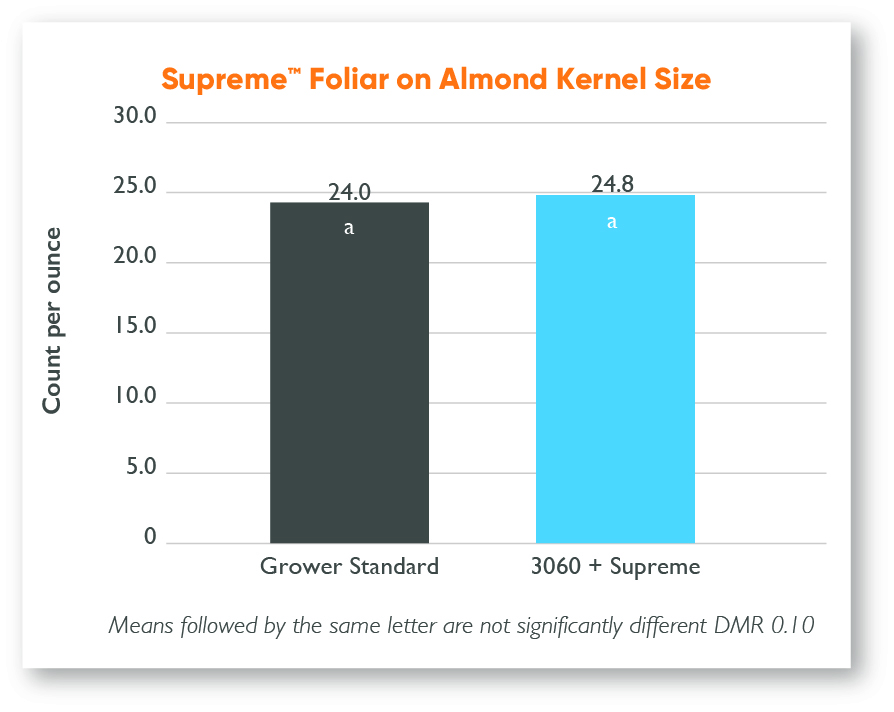
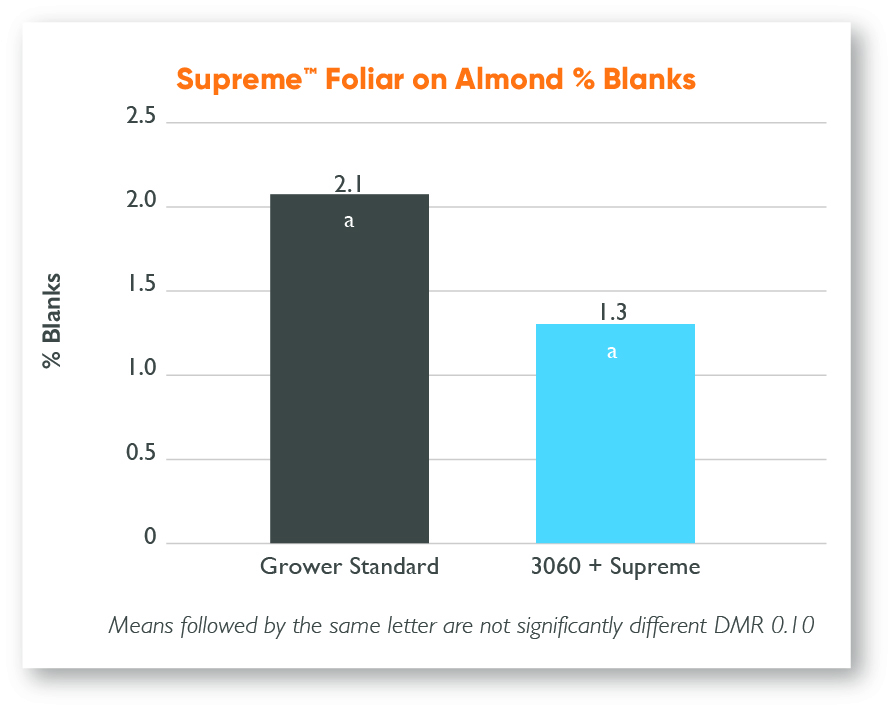
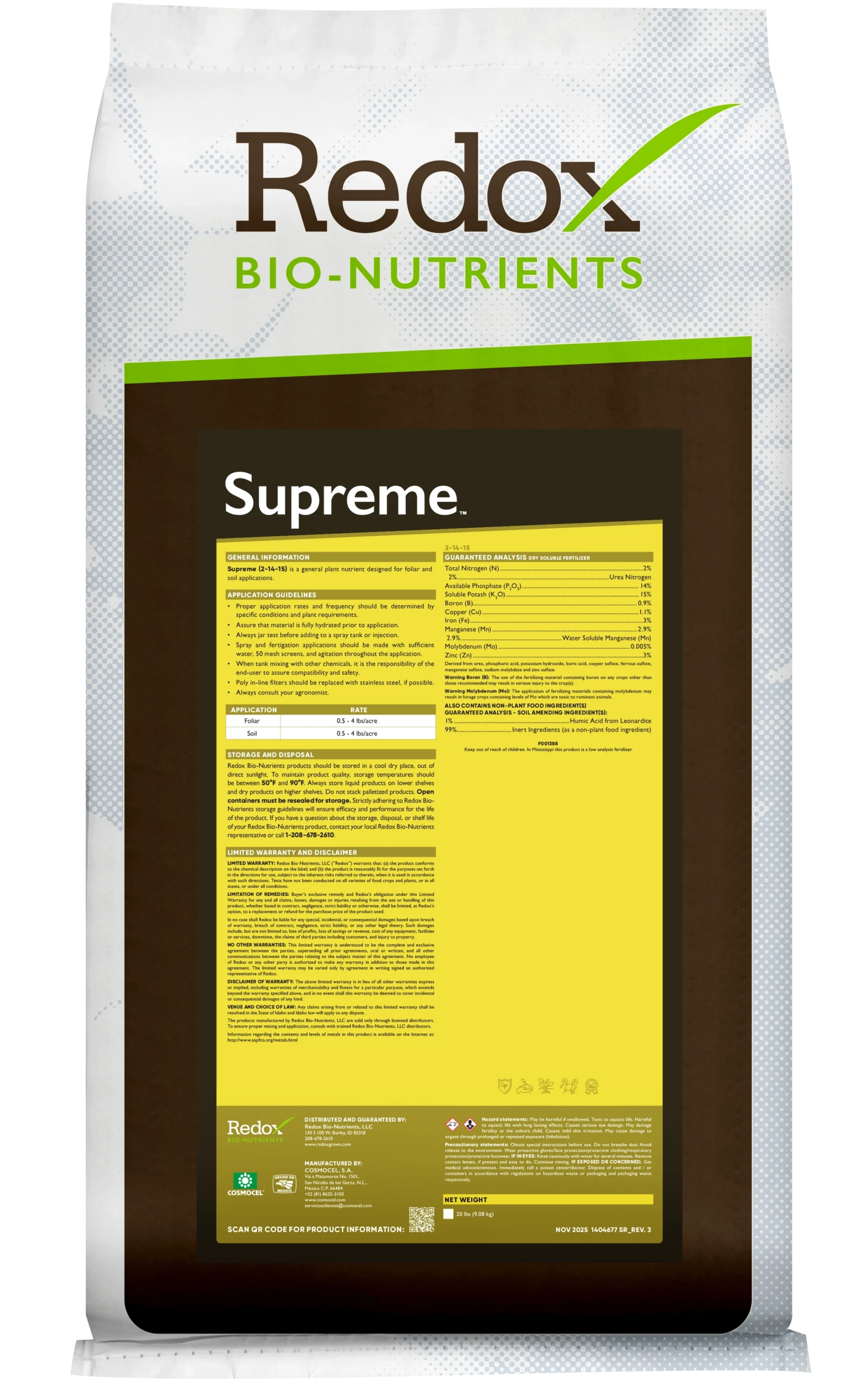
    Supreme™ delivers RAM derived complexed mineral and bio stimulant properties. These specifically drive early season movement of sugars and nitrogen metabolism in our crops. Applying Supreme™ during bloom and shortly after bloom improves crop set and size, depending on application timing. Here is some data to back that up.


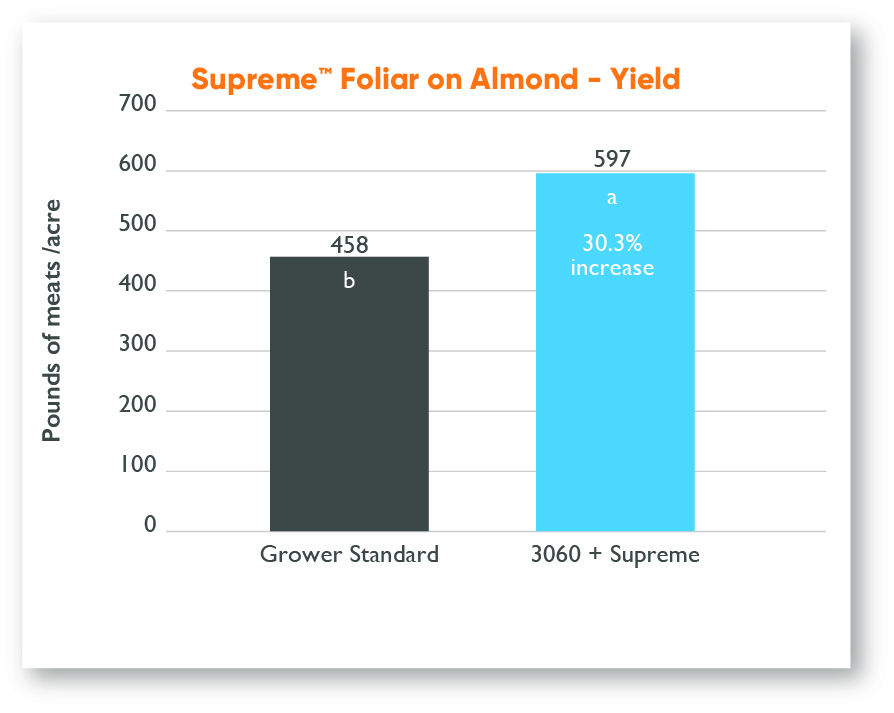
    Material was applied with an air blast sprayer at a spray volume of 100 gallons per acre. Nuts from each tree were isolated and field weights were taken. Each sub-sample was hand cracked for quality evaluations. Supreme™ was applied three times and 2 lbs./acre, with applications at pre-bloom, petal fall and at five weeks. Nut weight, kernel size and percent of blank kernels were evaluated. The results were impressive. Supreme™ increased yield by 30.3% and decreased blanks by 38.1%.

    Supreme Product

    Improve Nitrogen Metabolism with Velox™ (formerly V-55).

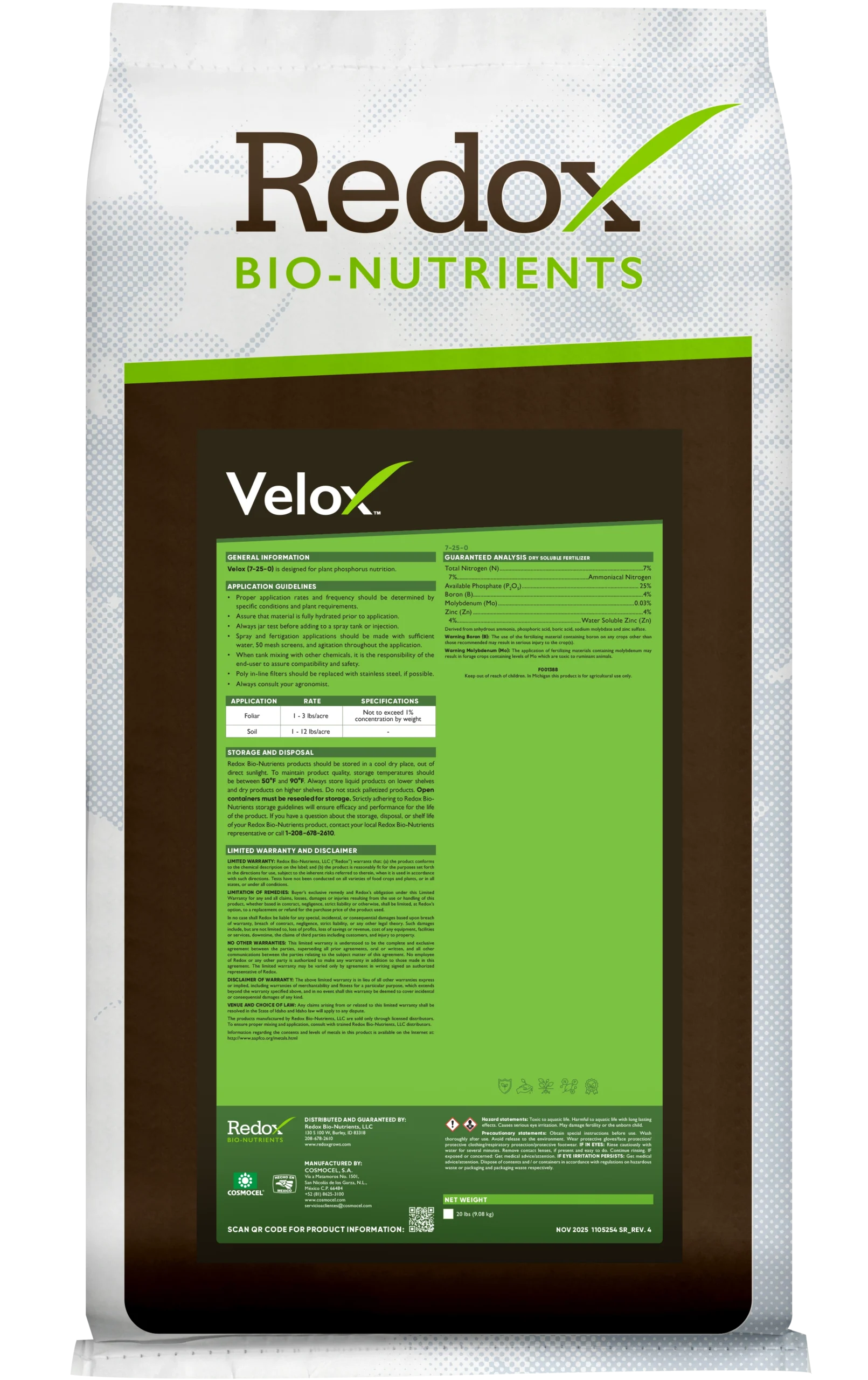
    Velox™ is specially formulated to improve general reproductive energy in plants. This product uses complexing technology to improve mobility of phosphorus, zinc and boron in the plant.

    As with the Redox product line, a little goes a long way. Suggested application is 1-2 lbs. per acre. This product has been proven to increase the set of fruit, nuts, and other crops!!! Check the data for yourself.

    Supreme Product


    Don’t forget Calcium and Silicon at Bloom – Redox sets the standard with These Nutrients

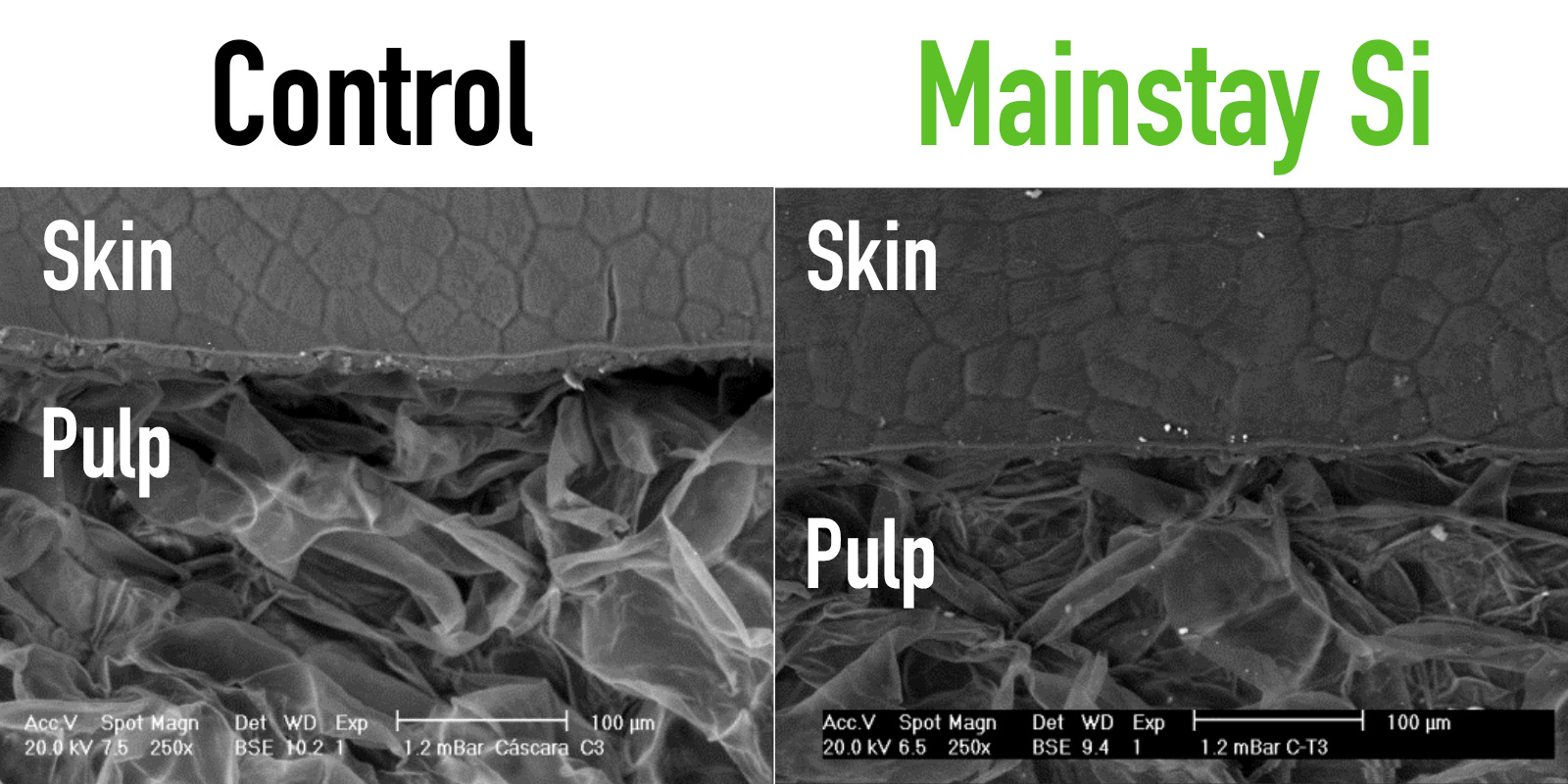
    Calcium plays a pivotal role in cell division and defines quality of cell structure. Silicon has symbiotic relationship with Calcium since it helps organize the strong cells that have adequate calcium. This “STACKING” that Redox is known for is a way to increase your crops integrity. Reducing space taken up by oxygen and replacing it with carbon sources. Less air, more fruit, more weight, and more money in your pocket per unit of crop!!! Check data below to see how we will prove it to you!

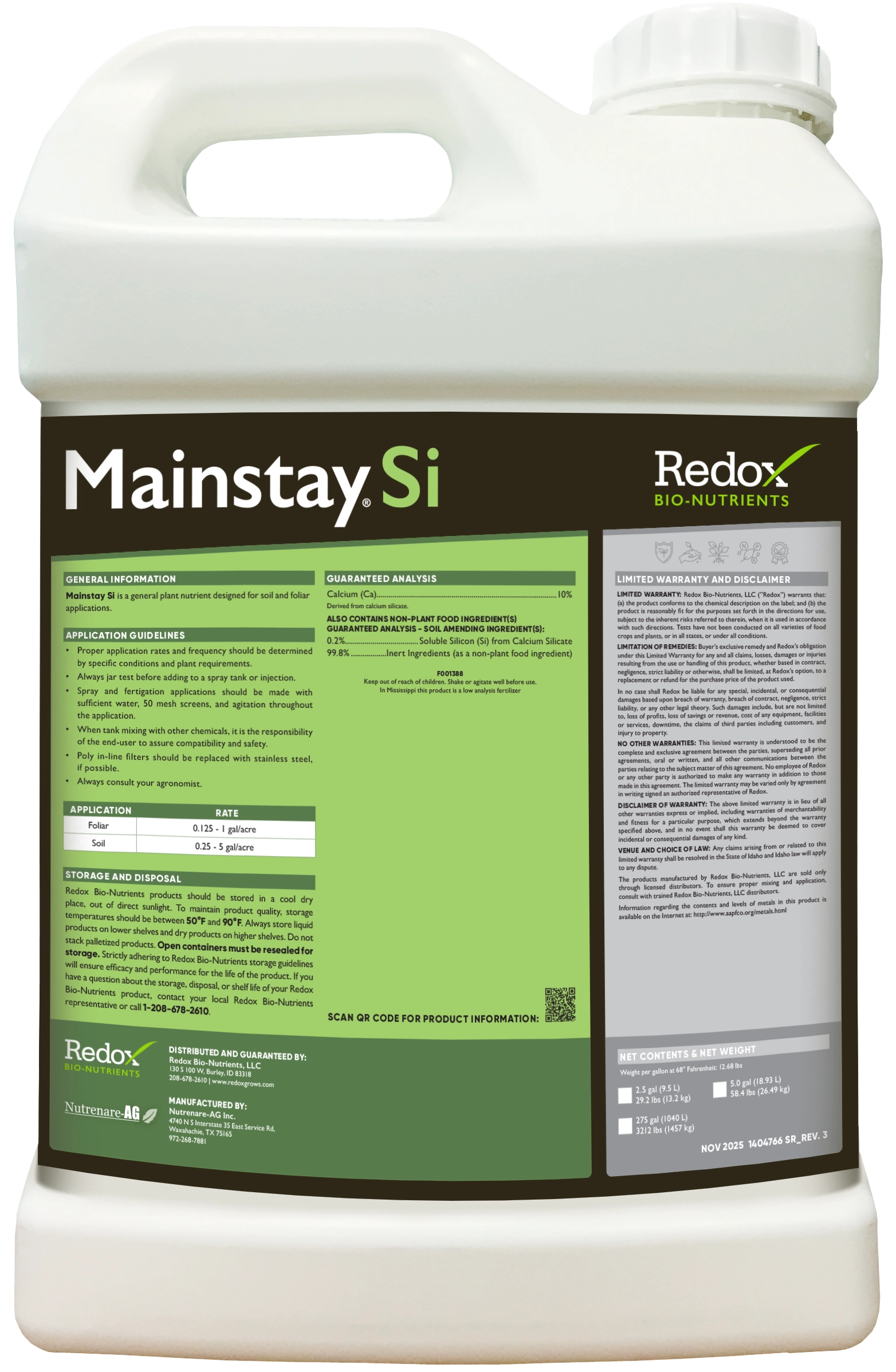
    Apply 16-32 ounces of Mainstay® Si starting at pink bud, along with Supreme™ applications.

    Supreme Product

    By AJ Borges, Redox Bio-Nutrients agronomist for California. Email: aj.borges@redoxgrows.com

    Learn more Here

  • Best Practices for Nighttime Applications

    Honey bee health remains a top priority for almond growers as bloom approaches. According to the Almond Board of California’s Honey Bee Best Management Practices (BMP), one of the most effective ways to reduce bee exposure to crop protection materials is to schedule applications during the evening or nighttime hours, when foraging bees have returned to their hives. The BMPs also emphasize strong communication among growers, beekeepers, PCAs, and applicators to ensure everyone involved knows when applications will occur and can coordinate accordingly.

    Working after dark though can be dangerous. While doing so helps to reduce pollinator exposure to applications, it also requires growers to operate within California’s specific nighttime safety regulations.

    Understanding Nighttime Safety Requirements

    California’s Outdoor Agricultural Operations During Hours of Darkness standards apply to all agricultural work occurring between sunset and sunrise. These regulations require growers to ensure adequate visibility throughout the work environment. Orchard areas, walkways, and paths to restrooms must meet minimum illumination levels measured directly where workers walk or perform tasks.

    Additionally, equipment such as trucks, tractors, and other self-propelled machinery must have headlights and rear lights capable of illuminating at least 50 feet ahead and behind, improving safety for both operators and ground crews. These lighting requirements help reduce the risks posed by diminished nighttime visibility, especially when work involves multiple people and moving equipment.

    Preparing Crews with Pre‑Shift Safety Meetings

    Before each night shift begins, California regulations require supervisors to hold a safety meeting to review important site information. Workers must be informed of the locations of restrooms, drinking water, designated break areas, nearby bodies of water, and high traffic zones. Because nighttime conditions can make familiar surroundings more difficult to navigate, these meetings ensure workers can safely move around the orchard and are aware of any specific hazards.

    Employers are also required to provide and ensure the use of Class 2 high‑visibility garments, helping equipment operators maintain awareness of workers on the ground. Review the Outdoor Agricultural Operations During Hours of Darkness fact sheet for more information and all of the requirements.

    A Unified Approach for Safer, More Effective Operations

    When growers pair honey bee protection guidelines with the required safety measures for nighttime work, the result is a more sustainable and efficient approach to orchard management. Bees remain safely inside their hives during nighttime applications, greatly reducing their exposure to crop protection materials. At the same time, crews can work confidently and safely under proper lighting, with clear preparation and the right equipment.

    As bloom approaches, these practices support the long‑standing commitment of the almond industry to safeguard both pollinators and people. This thoughtful balance ensures that orchards remain not only productive, but also safe and welcoming places for the bees that sustain them. To learn more about protecting pollinators, download the ABC Honey Bee Best Management Practices guide. — Article and image courtesy of Almond Board of California

  • Almond Conference Updates Growers on Best Practices for Bees & Pollination

    As almond growers prepare for pollinating their orchards — one of the most important tasks for establishing the new crop — here are insights from the Almond Conference to consider.  A “Honey Bees & Pollination” panel was moderated by Josette Lewis of the Almond Board of California (ABC).

    Hives Per Acre for Self-Fertile Cultivars: Elina Niño

    Following a string of bee losses over the past twenty years, 2025 was especially severe, with a 62% loss.  According to Elina Niño, apiculture scientist at UC Davis, the losses are becoming unsustainable.

    Niño pointed out that, in spite of having only 0.6 million of the 2.5-2.7 million colonies in the US, California ranks third in honey production, after North and South Dakota.

    Niño conducted a study of the pollination needs of self-fertile cultivars.  She excluded bees from some trees and for others used one or two hives per acre.  She counted the number of bees per flower per hour and after harvest she measured the kernel mass of 100 nuts per tree.

    The results showed that the number of visits per flower was similar for one hive as for two hives per acre.  Although the trees set more nuts and yielded more weight when one or two hives were present, kernel mass was higher where bees were excluded, presumably due to spreading the trees’ resources over fewer nuts.

    State of the US Commercial Beekeeping Industry: Matt Beekman

    The biological state of the beekeeping industry is precarious, according to Matt Beekman, a beekeeper based in Hughson, California who spends summers in North Dakota.  He presented a biological and financial State of the Beekeeping Industry report.

    Parasites & Pathogens: Varroa Mites & Viruses

    The varroa mite parasite continues to afflict beehives.  Reproducing quickly, the mites vector viruses that then spread from bee to bee in the densely populated hive.  The viruses can also spread in semen.  Area-wide applications of miticide help manage the mites.

    Only one chemical had been approved to suppress varroa mites since 2005.  That chemical, Amitraz, was registered for beehive use in 2013 in California, the last state to do so.  Some softer chemistries are available, but they are temperature dependent.

    California approved two new products in 2025, one oxalic acid-based and the other RNA-based.  They are expensive, though, costing $74 per colony per year.

    Nutrition: Where Have All the Flowers Gone?

    Each hive needs about 50 pounds of pollen and 100 pounds of nectar year.  With fewer acres enrolled in the federal Conservation Reserve Program, pollen and nectar may be scarce.

    Alternatively, almond growers can plant cover crops in the orchards to meet the need.  Seeds for Bees supplies free, appropriate cover crop seeds the first year and a discounted price the second year.  Many growers continue buying the seeds annually after seeing how effective they are.

    Pesticides: No to Organosilicon Adjuvant

    Used to amplify the effectiveness of pesticides, organosilicon surfactants harm bees.  Growers should ask their PCA to use one of the available alternatives instead.

    Beekman said that fungicides need to be sprayed during bloom, but advised using no tank mixes, adjuvants or insecticides during bloom, and applying fungicides in the early evening when bees are not flying.

    Financial Snapshot

    The net profit for beekeepers in 2024 was $11 per hive.  Overtime wages adversely impacted beekeepers, who need workers to do nighttime maintenance and overnight travel.  US honey production is declining due to fewer locations where bees can be placed to collect nectar.  The bees need more access to public land.

    Meanwhile, honey imports are increasing.  Imported honey is sometimes cut with synthetic sugar syrups.  Since honey is one of the few commodities for which the US does not have a standard definition, ambiguity and adulteration occur.

    India is now the largest exporter of honey into the US, with prices of $0.99-1.08/lb.   The US price is $2.69/lb., and the yield is declining.   

    Endangered Pollinator Species: Alexi Rodriguez

    Some insect species have been proposed for endangered species status for the first time, according to Alexi Rodriguez of the Almond Alliance.  One such insect is the monarch butterfly, which has little overlap with agriculture except for coastal sites in winter.

    A 2018 petition proposed adding four bumblebee species.

    Rodriguez said that if growers take reasonable, research-based steps to support pollinators, they will be immune to prosecution if incidental harm occurs.  The steps include using IPM (Integrated Pest Management) and planting pollinator habitat.

    Questions from the Audience

    Q: Is it worth getting mason bees to complement honeybees?

    A: Yes — blue orchard bees (a type of mason bee) — but you have to contract it separately.  They fly in colder temperatures and in rain.

    Q: Was there a bee shortage in 2025?

    A: That was not studied, but growers were saying that they did not get the number of frames they contracted for.  It’s possible that insufficient bees caused the lower yield last year, because everything else was good in 2025.

    Q: What about indoor cold storage of bees in empty warehouses to break the varroa mite cycle?

    A: It did not go well when tried in Kern County.

    Q: Does supplementing the almond orchard with pollen help with pollination?

    A: There is no research on that, but it is unlikely to help based on flower anatomy and the need for insects to get into the blooms to move pollen.

    Q: Does it help to move hives around during pollination?

    A: Yes, but it is a tradeoff economically due to the cost of labor to move the hives.  The most important variable is having morning sun on the hive to warm the bees enough to fly.  The bees will fly over the entire acre once they are warm.

    Q: What is a fair contract between grower and beekeeper?

    A: Eight frames average per hive; four to five frames minimum, 60% coverage.

    Q: Do herbicides impact bees?

    A: There is no research on that, but herbicides are not needed during bloom anyway.

    For more information about preparing for pollination, see Honeybee ABC.  By Nancy Power, PhD, Assistant Editor, Pacific Nut Producer
  • Almond Growers Anticipate Solid Crop Following Successful Bloom

    Despite some early spring rainstorms, the 2024 California almond crop is off to a great start after what turned out to be a very successful bloom. Watch this brief video as Pacific Nut Producer Editor Matthew Malcolm discusses this with agricultural data analyst Megan Nunes, CEO of Bountiful.

  • New Almond Board Programs Assist Growers with Pollination


    As almond pollination costs have gone up in recent years, the Almond Board of California has engaged in studies to help growers reduce costs and developed strategic partnerships with other organizations to provide some new services that almond growers should take advantage of.  Watch this brief interview with Josette Lewis from the Almond Board as she explains and read more about it in Pacific Nut Producer Magazine.

    Please thank this video’s sponsor Suterra for their industry support.

  • Wildfire Impact on CA Almond Harvest & Crop Update

    Are California almond growers really going to reach their record 3 billion pound crop this year? How have the wildfires impacted the harvest season? What kind of pest pressure levels are growers experiencing this year? What should almond growers expect at the virtual Almond Board Conference this year?  Watch this brief interview with Richard Waycott from the Almond Board of California to find out and read more about it in Pacific Nut Producer Magazine.

    Please thank this video’s sponsor Suterra for their industry support.

  • Almond Scab Management with Farm Advisor Brent Holtz

    Special Thanks to This Video’s Sponsor

    With almond bloom upon us, it’s time to think about our bloom and post-bloom sprays to manage brown rot and almond scab. Watch this video for some great tips and considerations from UC Farm Advisor Brent Holtz. Read more about it in the current issue of Pacific Nut Producer Magazine.

  • Cover Crops Complement, Not Compete with Almond Bloom

    The engineering of flowering agricultural field borders has emerged as a research and policy priority to mitigate threats to pollinators. Studies have, however, rarely addressed the potential that flowering field borders might compete with neighboring crops for pollinator visits if they both are in bloom at the same time, despite this being a concern expressed by growers. We evaluated how wildflower plantings added to orchard borders in a large (512 ha) commercial almond orchard affected honey bee and wild bee visitation to orchard borders and the crop. The study was conducted over two consecutive seasons using three large (0.48 ha) wildflower plantings paired with control orchard borders in a highly simplified agricultural landscape in California. Honey bee (Apis mellifera L.) and wild bee visitation to wildflower plots were at least an order of magnitude higher than to control plots, but increased honey bee visitation to wildflower plots did not lead to any detectable shifts in honey bee visitation to almond flowers in the neighboring orchard. Wild bees were rarely observed visiting almond flowers irrespective of border treatment, indicating a limited short-term potential for augmenting crop pollination using wild bees in highly simplified agricultural landscapes. Although further studies are warranted on bee visitation and crop yield from spatially independent orchards, this study indicates that growers can support bees with alternative forage in almond orchards without risking competition between the wildflower plantings and the crop.  Read the full report from Oxford’s Environmental Entomology Journal Here.

  • PNP February 2018 Issue

    Contents of the February Issue:

    [two_fifth]

    PNP February 2018 Cover

    [btn btnlink=”https://malcolmmedia.com/order-a-back-issue/back-issue-pacific-nut-producer-magazine/” btnsize=”full” txtcolor=”#ffffff” color=”#FFF” bgcolor=”#492500″ btnnewt=”1″ nofollow=”1″]Order A Back Issue[/btn]

    [btn btnlink=”http://malcolmmedia.com/pacific-nut-producer-magazine-subscriptions/” btnsize=”full” txtcolor=”#ffffff” bgcolor=”#492500″ btnnewt=”1″ nofollow=”1″]Subscribe Free[/btn]

    [/two_fifth]
    [three_fifth_last]

    Farming the Madera Ranchos with Craig Wylie
    Winning the War on NOW & Other Pests


    Pollination Points
    Cover Crops Complement Almond Bloom


    Almond Alliance President Kelly Covello Resigns
    Andrea York Announced as Acting President


    Weed Control, Now & Later
    Kurt Hembree Addresses Herbicide Resistance


    State of the Almond, Pecan & Walnut Industries
    Grape, Nut & Tree Expo Offers a Wealth of Knowledge


    2018 Pistachio Crop off to a Poor Start
    Chill Portions & Rainfall Down in an On-Year

    [/three_fifth_last]