Category: Featured Post

  • 2022 Postharvest State of the California Almond Industry

    2022 Postharvest State of the California Almond Industry

    The 2022 California almond harvest is in the books now, and growers are appreciating a much needed breather. The crop came in considerably short in comparison with the last couple years. How will this reflect on the market and what other factors are currently at play? Watch this brief interview with Richard Waycott, President of the Almond Board of California, as he explains. Read more about it in the December issue of Pacific Nut Producer Magazine.

    Please thank this video’s sponsor Suterra for their industry support.

  • Fumigation Considerations Before Replanting an Orchard

    Fumigation Considerations Before Replanting an Orchard

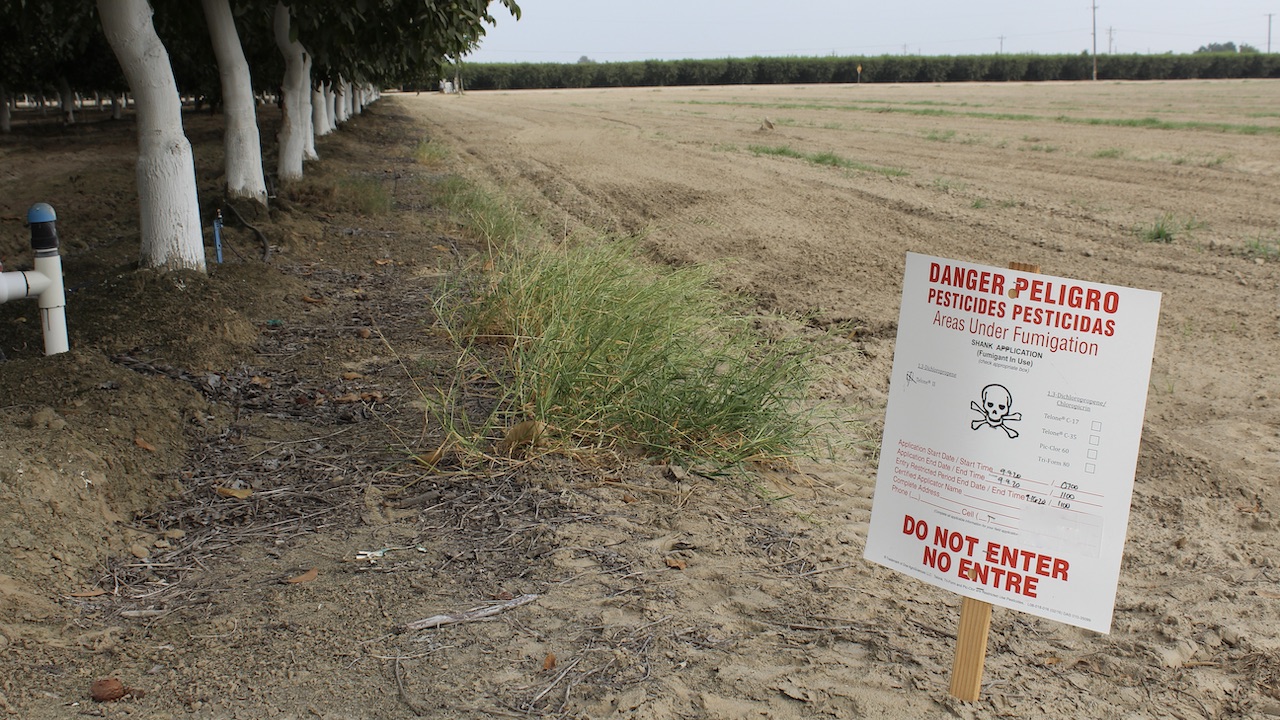
    It’s that time of the year when orchards are being pulled and growers begin preparing their soil for future plans.  For growers looking to replant their orchards, watch this brief interview with UC Riverside Nematologist Andreas Westphal as he shares some considerations to take for fumigation when it comes to nematode pressure.

    Please thank this video’s sponsor Suterra for their industry support.

  • Sucker Control Options for Hazelnut Growers

    Sucker Control Options for Hazelnut Growers

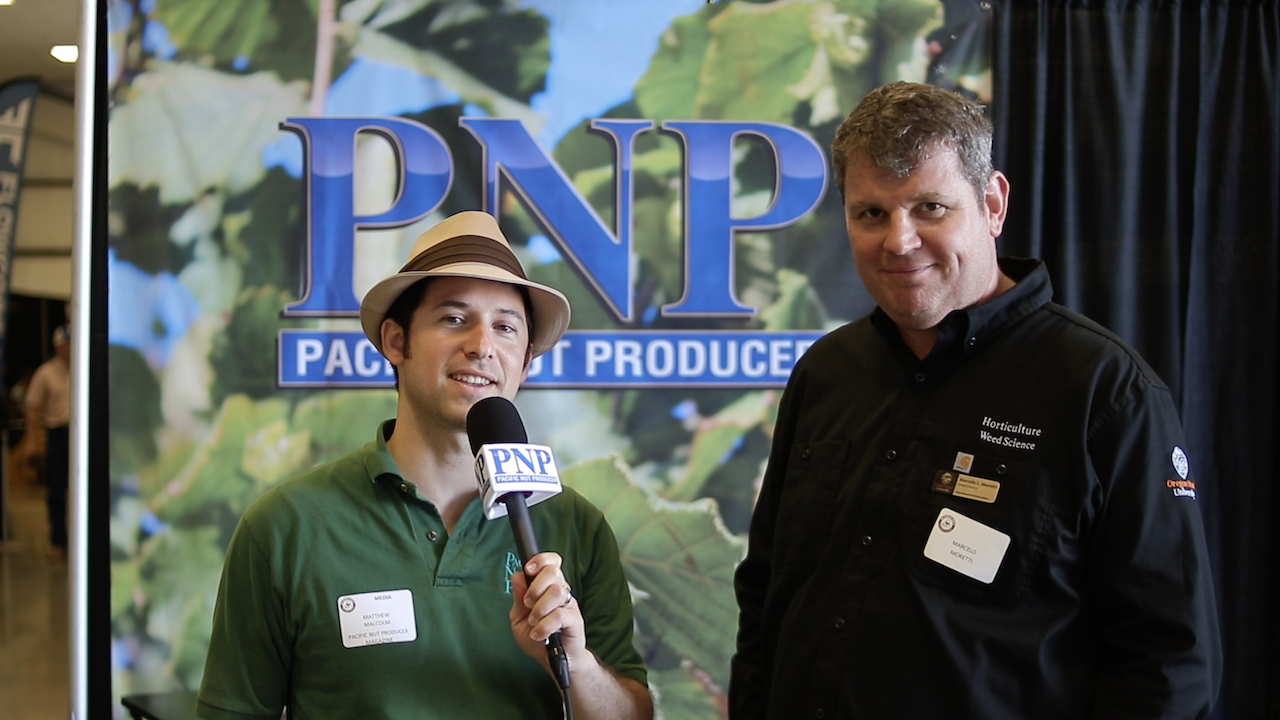
    Probably more than any other tree nut crop, hazelnuts love to produce suckers, especially in their early years of development.  Too many suckers can divert a young tree’s energy and slow down the overall growth and productivity of the tree.  Watch this brief interview with Marcelo Moretti from Oregon State University as he shares what growers can do to mitigate this.  Read more about it in Pacific Nut Producer Magazine. Don’t currently receive this monthly publication? Subscribe for free at: https://malcolmmedia.com/subscribe/

    Please thank this video’s sponsor Suterra for their industry support.

  • New UCCE Advisor to Serve Tree Fruit & Nut Growers in Merced and Madera

    New UCCE Advisor to Serve Tree Fruit & Nut Growers in Merced and Madera

    The UC Cooperative Extension is pleased to introduce one of their newest Orchard Crops Advisors, Cameron Zuber, who will be serving tree fruit and nut growers in Merced and Madera Counties. Watch this video interview to get to know Cameron, his history with California agriculture, and what his research and extension focuses are.  Cameron can be reached at (209) 385-7403 or cazuber@ucanr.edu.

    Please thank this video’s sponsor Suterra for their industry support.

  • CA Almond Export Situation Improves, Almond Alliance Update

    CA Almond Export Situation Improves, Almond Alliance Update

    As almond growers were preparing for harvest this year, there were major concerns as to whether their crop would have a home overseas, due to port and logistical issues (both locally and worldwide).  The Almond Alliance of California quickly worked to bring authorities together to address this issue and do whatever it takes to get product onboard ships destined to our almond export countries.  Watch this video with Almond Alliance President Aubrey Bettencourt, as she shares how conditions have improved with more work to be done. She will be presenting more information on this at the Tree & Vine Expo on November 8 in Stanislaus and at the Grape, Nut & Tree Fruit Expo on November 11 in Fresno, so be sure to register FREE at https://agexpo.biz/ to attend.

    Please thank this video’s sponsor Suterra for their industry support.

  • Walnut Bargaining Association Recommends Minimum Grower Price

    Walnut Bargaining Association Recommends Minimum Grower Price

    In an effort to keep walnut prices from tumbling further downward, the Walnut Bargaining Association (WBA) is recommending a minimum price recommendation that will return at least 65 cents per pound back to growers. This price is based on in-shell Chandlers, Jumbo/Large, average quality.

    “Our organization is concerned that walnut prices will continue to fall without some minimum price being suggested,” said Jonathan Field, Executive Director of the Walnut Bargaining Association (WBA), a grower cooperative that exists to ensure walnut farmers receive fair prices. “The WBA realizes there is ample carryover from 2021 which needs to be moved out prior to marketing new crop, but this should not be done at the expense of the current crop and production. We believe buyers are willing to pay more for walnuts and we’re urging handlers to move prices up from current levels.”

    According to Field, current prices being offered by handlers will result in only 45 or 50 cents per pound going back to growers, which is substantially below break-even. The 65 cents per pound minimum grower return recommended by the WBA, means handler trade prices need to immediately increase from current levels to cover handling costs and margins.

    Historically, handlers have published a minimum price for walnut exports in August. This didn’t happen in 2022 due to several unknowns surrounding the new crop and global supplies. The WBA will publish its official price recommendation for the 2022 crop after more is known about crop size and quality, worldwide production and the effect of the economy worldwide on prices, movement and utilization.

    “The WBA Board feels strongly the current California crop will come in lighter than expected,” said Todd Ramos, a walnut grower from Winters who is chairman of the WBA. “As walnut harvest continues throughout the state, growers are reporting less volume and more damage from the excessive heat than what was expected before the announcement of the 2022 crop estimate. These factors will reduce overall tonnage.”

    “California walnut farmers are struggling with record inflation of production costs and severely depressed prices which make it impossible to be profitable,” continued Ramos.  “The industry needs every handler to adhere to the minimum price point recommended by the WBA.”

    The WBA is urging growers and handlers to work together to stabilize the market as much as possible. They suggest that payment schedules, advances, timing of payments and all mutually beneficial discussions take place as soon as possible.

    The WBA recently launched a campaign to raise awareness about the benefits it provides to walnut growers by sharing information on prices walnut farmers receive from their handlers.

    “The WBA collects only verifiable information on grower price,” said Field, “That’s why the pricing information collected by the WBA is considered the most accurate data available. It’s definitely more reliable than what growers hear at the coffee shop.”

    The WBA hopes to gain new members so that they can collect even more accurate data.

    “When additional walnut growers join the WBA, our grower pricing data becomes increasingly comprehensive and the better the WBA can help us get the highest price for our walnuts,” said Ramos.  “The WBA understands by uniting together cooperatively with our handlers and marketers, we all stand the best chance for success.”

    More information about the WBA can be found on their website.  Growers interested in receiving sample reports and information from the WBA can sign up here.

  • Walnut Bargaining Association Asks Handlers to Hold Off on Setting Prices

    Walnut Bargaining Association Asks Handlers to Hold Off on Setting Prices

    The Board of the Walnut Bargaining Association (WBA) met last month in Sacramento to discuss the outlook for this year’s walnut crop.  Traditionally, this is the time of year when the industry begins to hear estimates from handlers about prices growers can expect to receive for their walnuts. But this year, the WBA is hoping to delay these decisions.

    “So much is still uncertain at this time,” said Pete Jelavich, WBA member from Yuba City. “The California Ag Statistics Service (CASS) has set the pre-season crop estimate at 720,000 tons, but many growers believe recent weather events since the estimate was released will reduce yields. We’re also waiting to learn more about global supply conditions and about the volume and quality of last year’s crop is still available for sale. Both of these factors will play a major role in the price we’ll receive for our walnuts for the new season.”

    In general, grower prices for walnuts have been at record lows for the past few years. And while the WBA doesn’t expect things to change dramatically this year, they are cautiously optimistic that things will improve a bit over last year.

    According to WBA statistics, last year’s CASS estimate was way off its pre-season estimate of a 670,000-ton crop. The actual crop was significantly larger and eventually came in at 730,000 tons. As a result, actual prices for walnuts were dramatically lower than what was predicted in early fall.

    “This year, we could very likely have the opposite scenario,” said Jonathan Field, Executive Director of the WBA.  “The CASS crop estimate is just slightly below last year’s actual crop, but the report indicated far fewer nuts per tree and kernel weights that are much lighter than normal. As a result, the crop may come in lighter than predictions, which would hopefully drive prices up.”

    “The WBA has sent a letter to handlers asking them not to jump the gun on setting walnut prices until we know more about the crop size and for some of the unstable market conditions to settle a bit,” said Jelavich. “Growers need to receive higher prices for our walnuts than we have for the past few years. So, we’re asking handlers to work with us and wait until we know more.”

    According to Jelavich, the whole reason for the existence of the WBA is to improve grower pricing. But many walnut farmers don’t even know the WBA exists. To combat that, the WBA has recently launched a new website and is funding a series of ads in walnut growing trade publications such as Pacific Nut Producer Magazine to help raise awareness about the WBA and what it’s all about.

    In short, the WBA is a grower-owned cooperative whose only goal is to help farmers get a fair price for walnuts. They do this by providing walnut farmers with accurate data, global market intelligence and information about actual prices walnut farmers receive from handlers.

    “Each year, the WBA collects information about the prices our members have received for their walnuts,” says the WBA’s Field. “This information doesn’t come from coffee shop talk. We get it by collecting pay stubs that growers receive from their handlers.”

    Grower pricing information submitted to the WBA is confidential. Name, address and ranch information on pay stubs is redacted to ensure anonymity. Specific information on handler names is also not made public. But the pricing information gathered by the WBA is the most accurate available anywhere. It gives WBA members a really good idea if the price they received was in line with the industry average or below it.

    “In many cases, the WBA pricing report has empowered our members to go back to their handler and secure an enhanced payment,” said Field.  “Our goal is to help make grower prices more transparent and to hold handlers accountable for paying farmers the right price.”

    The WBA is embarking on a membership drive in an effort to help all walnut growers receive better prices.

    “The more walnut farmers we have in our membership, the more accurate our pricing information will be and the greater unity we’ll have as a walnut farming community,” he said. “Joining the WBA might be the most important thing a walnut farmer can do to improve prices for walnuts.”

    The cost to join the WBA is $2 per ton. In addition to information on prices received from handlers, the WBA provides a host of additional economic and market intelligence that is very difficult to get elsewhere. This includes information on sales, supply-demand issues, trade market pricing, quality, and other global economic trends. 

    To learn more about the information provided by WBA, growers can register here to receive a sample of WBA reports. The new WBA website includes much more information about the WBA and its benefits of members. Growers can also hear testimonials from fellow walnut growers here and here.
  • How Oregon Hazelnuts Fit into Current Global Market Dynamics

    How Oregon Hazelnuts Fit into Current Global Market Dynamics

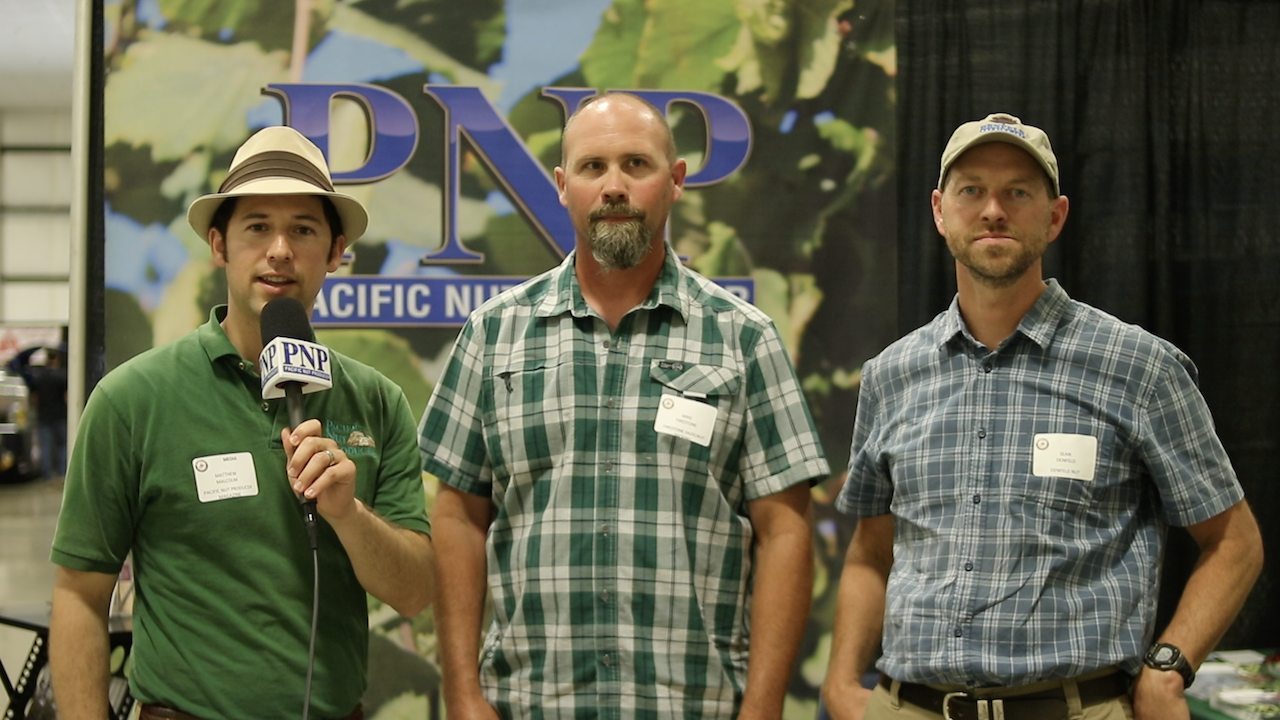
    While the 2022 hazelnut crop forecast is down from last year’s yields in the Pacific Northwest, there appears to be no shortage of hazelnuts on the global scale currently. Watch this brief interview with hazelnut packers Mike Firestone and Sean Denfeld as they share their perspectives on the global hazelnut market and how Oregon hazelnuts fit into the mix.  Read more about it in Pacific Nut Producer Magazine. Don’t currently receive this monthly publication? Subscribe for free at: https://malcolmmedia.com/subscribe/

    Please thank this video’s sponsor Suterra for their industry support.

  • What Growers & Handlers Should Know about Preventing Tree Nut Theft

    What Growers & Handlers Should Know about Preventing Tree Nut Theft

    There are a lot of risks involved in farming, such as weather, insect/disease pressure and a tightening labor force; and a crop finally getting harvested is generally accompanied by a sigh of relief.  However, the risks aren’t completely over yet, especially with the threat of postharvest crop theft in California. Watch this brief interview with Tulare County Sheriff Mike Boudreaux who addresses this issue and read more about in Pacific Nut Producer Magazine.

    Please thank this video’s sponsor Suterra for their industry support.

  • Iditarod Champion Shares Why Pistachios are His Protein of Choice

    Iditarod Champion Shares Why Pistachios are His Protein of Choice

    Not only do pistachios contain all the essential amino acids that make up a complete protein, but they also have other nutritional benefits that help the body through extreme cold weather conditions. That is why pistachios are the trail food of choice for five-time Iditarod champion dog musher Dallas Seavey.  Watch this brief interview with one of American Pistachio Growers latest ambassadors as he explains and read more about it in the latest issue of Pacific Nut Producer Magazine.

    Please thank this video’s sponsor Suterra for their industry support.