Category: Featured Post

  • Coach Prime Reveals the Nutrition Game Plan to Level Up Your Life — Almonds

    Coach Prime Reveals the Nutrition Game Plan to Level Up Your Life — Almonds

    Almond Board of California — Spring may be the offseason for football, but that doesn’t mean players stop putting in the work every day to stay on top of their game. Players aren’t in it alone though, which is why the ultimate motivator, Deion “Coach Prime” Sanders and California Almonds have teamed up to share how almonds and exercise recovery can help you own your prime, both on and off the field.

    “Almonds are not just a snack to me. They’re part of MY JOURNEY. They’re one of my pillars of consistency in preparing both physically and mentally for whatever’s next. And for me, that means at the HIGHEST LEVEL,” says Coach. “Your PRIME has no end destination… it’s A JOURNEY. And that journey should always be evolving and growing towards that place that you call ‘there’. In order to DOMINATE in that journey, you gotta put in the WORK – and it ain’t gonna be easy. Recovery is a key part of that journey, and you need to make sure you are recovering right.”

    Owning your prime is a mindset, not a moment. Coach Prime doesn’t just coach his players, he instills a consistent hunger for improvement and daily dedication – a lesson that can evolve your life too. Whether it’s taking daily walks, increasing lifting reps or training for a marathon, consistency is key. Hit a milestone? Celebrate and put in the work to reach your goal. To help you push to the next level, Coach Prime is dropping his wisdom to help you achieve your goals:

    Tip 1: Prime Time Health – Mind and Body in Sync
    If you ain’t takin’ care of YOU, how you gonna show up for anybody else? Your health? It’s non-negotiable. Gotta keep your mind sharp and your body ready for anything. That’s why I’m all about making the time to focus on my goals and taking care of myself. You want to stay prime? Then keep yourself right. Let’s ride!

    Tip 2: Fuel Up Like a Champion
    Listen, PRIME is ALL the time, and that means fueling up like a CHAMP. Right after my morning workout, I’m going for a handful of almonds for exercise recovery, then a power breakfast: oatmeal or grits, egg whites, and turkey bacon to keep me ready for whatever the day brings. Don’t get it twisted—you can hit a cheat meal every now and then, but when the foundation is solid, you will stay PRIME every single day.

    Tip 3: Every Day is PRIME
    It doesn’t matter if it’s game day, spending time with the fam, or reeling in the big catch, you always gotta be locked in, all day, every day. It don’t matter what day of the week it is—every day is game day when you’re living prime. IT DON’T STOP, BABY! You’re either in or you’re out, but PRIME don’t take days off!

    When you have your head in the game, an important part of reaching your goals is taking care of your body. Like Coach Prime emphasizes, exercise recovery helps you stay at your best and almonds can help you recover from exercise. Groundbreaking research shows that most study participants who ate two servings of almonds, (vs. a calorie matched cereal bar,) for four weeks prior to completing 90 minutes of exercise, reported reduced fatigue and tension, increased leg and lower back strength during recovery, and decreased muscle damage during the first day of recovery after completing the exercise.1 This research, funded by the Almond Board of California, was conducted over four weeks among 64 healthy, non-smoking U.S. adults ages 30 – 65 who are occasional exercisers (less than three sessions a week).

    For more tips on how to own your prime from Coach Prime himself, visit almonds.com/own-your-prime and follow Coach on Instagram to learn more about ways to own your prime in real time.

  • Economist Shares How California Farmers Should Respond to Economic Uncertainty

    Economist Shares How California Farmers Should Respond to Economic Uncertainty

    Economic uncertainty can be quite unsettling and can make important business and investment decisions difficult to navigate. Inflating costs, threatening tariffs and a volatile stock market are very concerning, especially in a state like California. World-renowned economist and financial expert Marci Rossell met with Matthew Malcolm on California Ag Network following a presentation she delivered to a group of American Pistachio Growers to address these concerns as they relate specifically to California farmers, whose success rely quite heavily on a healthy export market. Watch this brief interview to learn more.

    Please thank this video’s sponsor SQM Specialty Plant Nutrition for their industry support.

  • California Almond Industry Reaches Record Sales with Opportunities for Worldwide Market Growth

    California Almond Industry Reaches Record Sales with Opportunities for Worldwide Market Growth

    While tariffs and other trade barriers remain a high concern, the California almond industry has been experiencing record sales growth and shipments worldwide.  The Almond Board of California (ABC) remains optimistic for both the near and longterm future of the industry, continuing investments in new market development and research on new ways for consumers to enjoy this nutrient-dense product. Watch this video as ABC CEO Clarice Turner provides insight on what almond growers and marketers can anticipate with Matthew Malcolm on California Ag Network as shared at the recent annual Convention of the Almond Alliance of California.

    Please thank this video’s sponsor SQM Specialty Plant Nutrition for their industry support.

  • New Study Reveals Eye Health Benefits of Consuming Pistachios

    New Study Reveals Eye Health Benefits of Consuming Pistachios

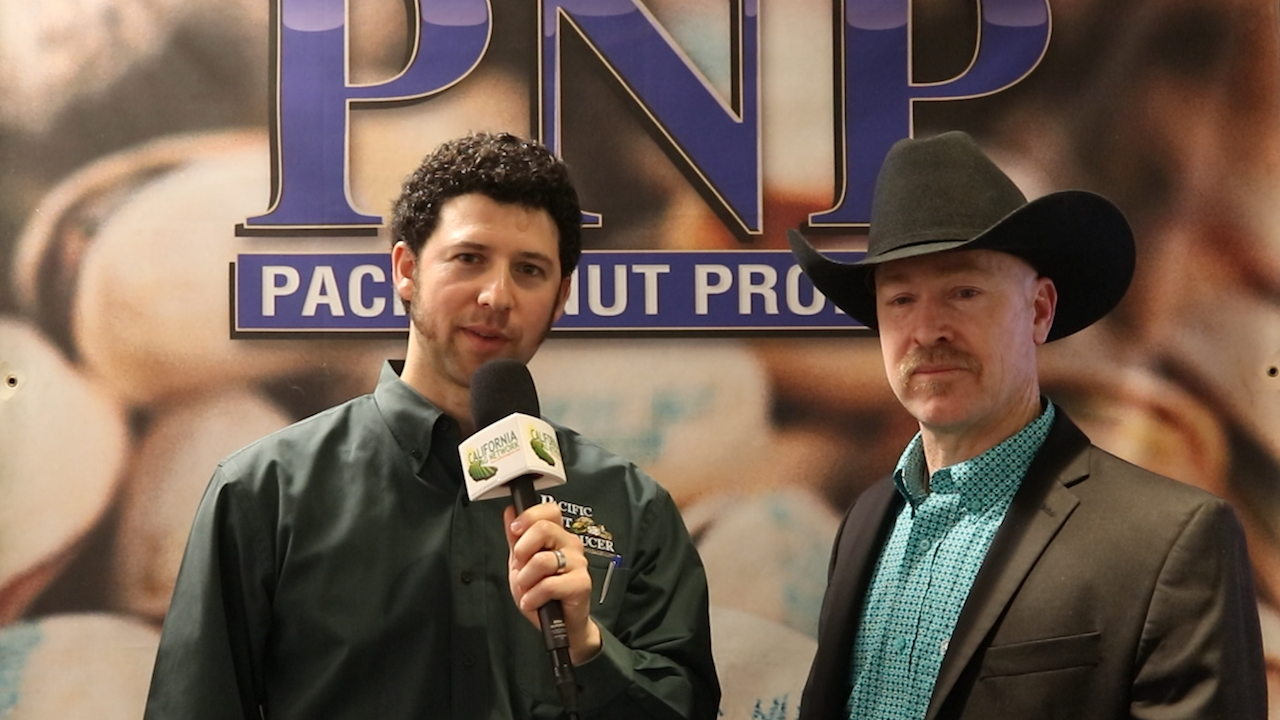
    A new study on the health benefits of pistachios may have consumers ditching their sunglasses and eating pistachios instead for eye protection. A natural ingredient unique to pistachios is responsible for this amazing impact on eye health.  American Pistachio Growers’ Senior Director of Global Nutrition & Marketing Amber Wilson met with Matthew Malcolm on California Ag Network to share the details of this research and the impact it’s having on consumers worldwide.  Watch this video and read more in Pacific Nut Producer Magazine.

    Please thank this video’s sponsor SQM Specialty Plant Nutrition for their industry support.

  • Four Trending Products with American Pistachios that Consumers are Raving about Worldwide

    Four Trending Products with American Pistachios that Consumers are Raving about Worldwide

    Pistachios are trending worldwide, not only as a snack, but also as an ingredient. At American Pistachio Growers (APG) annual Pistachio Industry Conference, growers got to taste the success of APG’s recent strategic partnerships. Sampling a high-value Pistachio & Kunafa (Dubai Style) Chocolate made exclusively with American pistachios was one such product everyone enjoyed, and consumers are raving about it worldwide. Pacific Nut Producer Editor Matthew Malcolm met with APG’s International Director of Marketing, Suzanne Devereaux, and in-country India representative, Sumit Saran, to highlight these new trending products that are strengthening the global demand for American pistachios. Watch this brief interview and read more in Pacific Nut Producer Magazine.

    Please thank this video’s sponsor SQM Specialty Plant Nutrition for their industry support.

  • Increased Global Demand for Oregon Hazelnuts has Growers Planting Again

    Increased Global Demand for Oregon Hazelnuts has Growers Planting Again

    Conditions were ideal for Oregon hazelnut growers to deliver a high-quality, high tonnage crop in 2024. Growers were also pleased with more favorable prices as well. Pacific Nut Producer Editor Matthew Malcolm met with Terry Ross from the Hazelnut Growers Bargaining Association to discuss factors influencing the higher returns and renewed confidence of the industry in planting more acreage. Watch this brief interview and stay current on hazelnut industry news by reading your monthly issue of Pacific Nut Producer Magazine.

    Please thank this video’s sponsor George Packing Company for their industry support.

  • Prospective Candidate for CA Governor Calls for Revolution Addressing Farmer Needs

    Prospective Candidate for CA Governor Calls for Revolution Addressing Farmer Needs

    At a recent Ag Breakfast Club meeting in Fresno, CA, farmers joined English-American Commentator Steve Hilton live on Fox News to share their urgent need for increased water allocations, among other challenges that need to be addressed to support agriculture across the state. Former policy adviser to British Prime Minister David Cameron, Steve is also seriously considering running to succeed Governor Newsom in 2026. Watch as Steve joins Matthew Malcolm on California Ag Network to discuss his views supporting agriculture and the need for a “California revolution”.

  • Got Carpophilus Beetle? Make it Official with Ag Commissioner

    Got Carpophilus Beetle? Make it Official with Ag Commissioner

    The carpophilus beetle, a serious pest threatening California’s almond industry, is officially documented in only four counties — Stanislaus, Merced, Madera, and Kings. However, according to entomologists and industry experts, its presence is far more widespread, raising concerns about the limitations of official reporting and its impact on securing resources for control and mitigation.

    Houston Wilson, a Cooperative Extension specialist in the Department of Entomology at UC Riverside, has been surveying reports and conducting research on the beetle in collaboration with other UC and USDA researchers. “We’ve identified infested orchards — both almonds and pistachios — from every county within the San Joaquin Valley,” Wilson said. “We’re also hearing reports of crop damage from the Sacramento Valley (Sacramento through Butte County), but we have yet to directly confirm it there due to limited survey efforts.”

    The Importance of Official Documentation

    Despite mounting evidence of the carpophilus beetle’s spread, official state records remain limited. Wilson explains that for a find to be considered “official,” the county Agricultural Commissioner must collect a sample and submit it to the California Department of Food and Agriculture (CDFA) for verification. The current process means that many beetle infestations, though identified by researchers, remain unofficial.

    “While we have unofficial records from our survey efforts, my understanding is that the official records only reflect what has gone through the CDFA process,” Wilson said.

    For growers, the discrepancy between unofficial and official findings is more than just a technicality — it could also affect the allocation of resources. According to the Almond Alliance, securing state and federal assistance depends on having documented proof of the beetle’s widespread presence.

    “The widespread documentation of the carpophilus beetle serves as a vital indicator of the extent and severity of the issue,” said Almond Alliance CEO Alexi Rodriguez. “When more counties report official beetle findings, it underscores the pervasive nature of the problem, highlighting its impact beyond isolated areas.”

    Challenges in Reporting

    Wilson acknowledges that the reporting process can be complicated, but he and his team actively assist growers. “If a grower contacts me about suspected beetle damage, I usually visit the farm to assess the situation,” he said. “If we confirm the presence of the carpophilus beetle in a county that hasn’t had an official report, we advise them to contact their Agricultural Commissioner and guide them through the reporting process.”

    Rodriguez recognizes the difficulties growers face in reporting. “I want to acknowledge that the reporting process is not easy; however, expanding the network of official findings will allow us to advocate for more effective solutions by highlighting the problem’s regional and national significance,” she said.

    Identifying the Carpophilus Beetle

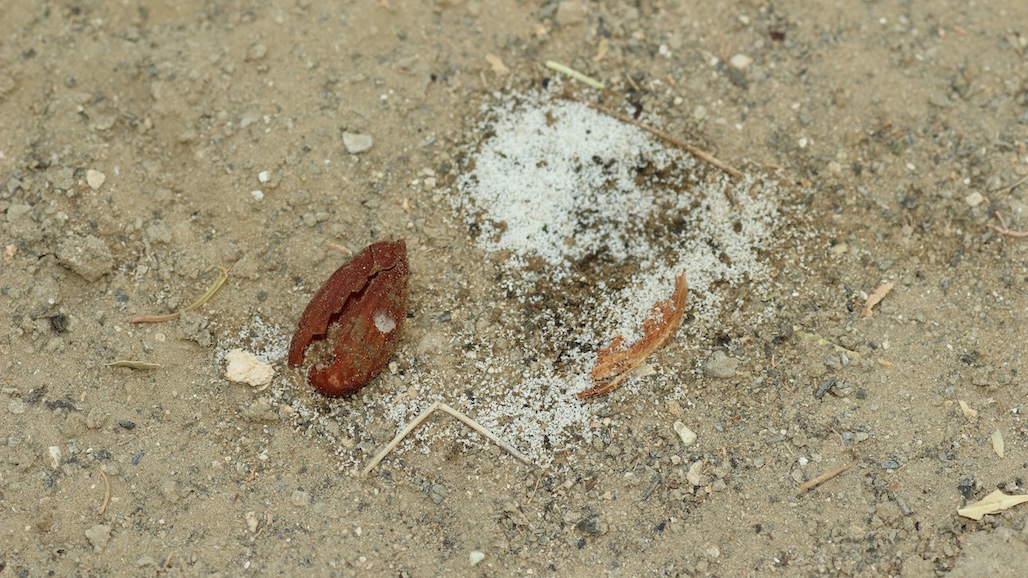
    For growers looking to detect the beetle, Wilson advises examining nuts in windrows, where nuts can be easily sampled. “The most apparent sign is a fine, powdery white frass on the nut, which results from beetle larvae tunneling into the kernel,” he said. “If you blow that frass away, you might see a circular hole in the shell where the adult beetle chewed through to lay its eggs. Inside, the larvae create distinctive oval-shaped tunnels in the kernel itself.”

    Wilson is part of a team that last year developed a pest identification guide to help growers differentiate carpophilus beetle damage from other pests, such as navel orangeworm or ants.

    Securing Support for Growers

    To address the growing concern, the Almond Alliance continues to work with officials at both the state and federal levels. “This engagement is expected to lead to more coordinated and robust interventions, mobilizing the necessary support and funding to mitigate the impact of beetle infestations on ecosystems, agriculture, and local economies,” Rodriguez said.

    Meanwhile, research efforts continue. “We’ve secured funding from the Almond Board of California and the California Pistachio Research Board for a second year, and we’ve now leveraged that into a larger pool of funding from the USDA,” Wilson said.

    Growers can also take advantage of upcoming pest identification workshops organized by the Almond Board of California in March, where they can learn more about identifying carpophilus beetle damage.

    A Call to Action

    With the evidence pointing to a much wider distribution of the carpophilus beetle than official records reflect, the push for more growers to report infestations is crucial. “If we don’t have official documentation, we can’t make the case for more resources,” Rodriguez emphasized. “We urge growers to work with their local Agricultural Commissioners to ensure the beetle’s spread is formally recognized.”


    By increasing official reports, the almond industry can strengthen its efforts to combat the carpophilus beetle, securing the necessary funding and support to protect California’s valuable almond crops. — By the Almond Board of California

  • Central Valley Farmer Responds to Initial 2025 Water Allocation

    Central Valley Farmer Responds to Initial 2025 Water Allocation

    On February 25, the Central Valley Water Project announced an initial farm water allocation of 35%. This comes as welcome news to farmers that were hampered last year around the same time by an initial allocation of only 15%.  Watch this brief interview with pistachio/carrot grower and Director at Westlands Water District William Bourdeau, as he shares his perspective on the announcement on California Ag Network with Matthew Malcolm.

  • Almond Orchards Prevail in Battle with Phytophthora

    Almond Orchards Prevail in Battle with Phytophthora

    SPONSORED CONTENT

    Losing crops is a reality of farming, especially when you’re battling weather, new pests and emerging diseases. Seeing a few acres of your life’s work perish is tough, but the threat of losing your entire operation is a different type of sting. One California almond grower shares how soil health improvements made his orchards vulnerable to disease and how he was able to bring them back from the brink of total devastation.

    Trees Lost to Unusually Wet Weather Worsened by Soil Prep

    Whole orchard recycling is a process to reincorporate an outgoing orchard in preparation for planting a new one. Mature trees are felled and ground into woodchips, which are then spread and incorporated into the soil. The University of California found that this process can help improve water retention. The issue for John Fassler, a California pest advisor who went through whole orchard recycling, was that the moist soil and greater-than-normal rainfall turned his orchards into the perfect breeding ground for oomycete pathogens like Phytophthora.

    Fassler has consulted at Braden Farms where they used whole orchard recycling as a way to prepare for planting a new orchard. “This is a fairly new process, which means we’re learning as we go,” he says. “Some issues we’ve seen have been a rise in fungal diseases, such as Phytophthora and other replant diseases.”

    Mother Nature hasn’t helped the fungal disease risk, especially at the beginning of the 2023 growing season. California experienced greater than average annual precipitation in 2023, breaking numerous records and ending three years of persistent drought, according to the California Nevada River Forecast Center.

    “We’ve had significant rainfall in California the last two years, so this has really intensified the battle with Phytophthora in some spots,” says Ashley Bandoni, Syngenta sales representative and California almond grower.

    Fassler experienced devastation due to those heavy rains. One of his orchards was completely submerged, worsening the orchard’s Phytophthora issues.

    “We lost about 500 trees on this block due to Phytophthora and replant disease,” says Fassler. “Phytophthora is becoming more and more of an issue in these wetter years.”

    Watch Video

    Phytophthora Overtakes Young Almond Trees

    Many California growers and crop consultants have been battling fungal disease challenges.

    Ethan Nicol, an independent pest control advisor and crop consultant for Balanced Agronomics, helped one of his customers manage extreme Phytophthora in a young almond orchard.

    Planted in the fall of 2021, Nicol began seeing early symptoms of Phytophthora infections the following spring. Young trees like the ones in the orchard Nicol manages tend to be more susceptible to disease because their root systems and crown areas are smaller compared to those of mature trees, according to the University of California Department of Agriculture.

    “In that first 2022 season, we observed maybe 30 percent of the orchard was infected,” says Nicol. “By mid-August, we had really grown to realize the significance of the issue.”

    Watch Video

    Coming Back from Orchard Devastation

    For both Nicol and Fassler, almond yield potential was on the line and devastation was just over the horizon. They both had a tough decision to make.

    “As far as doing our research going into it, usually we have the Syngenta reps come in to help us decide if the product will be a good fit for us,” says Fassler. “We also ask about how the product differentiates itself from what we’ve already been doing.”

    After discussions with their local Syngenta experts, Fassler and Nicol decided to apply Orondis® fungicide to help save their orchards. Fassler says his flooded orchard plot turned around.

    “My experience with Orondis changed up our program,” says Fassler. “We’ve been able to work it into our program really well and we didn’t lose one tree this year.”

    Nicol’s experience with Orondis was also nothing short of extraordinary. Before application, Nicol was working with the grower to continuously remove and replant dead trees. They lost roughly 600 almond trees — six ranches — to Phytophthora. Once Orondis was applied in 2023, Nicol observed a noticeable decline in newly infected trees.

    “We were confident in the success that we were seeing by the replants taking and growing strongly, and the existing trees continuing to grow and not develop signs of Phytophthora,” says Nicol. “Going into 2024, just as a precaution and to help protect this investment, we made an additional Orondis application. There’s been almost no sign of infected trees this season.”

    Growers Also Need Care

    If Fassler and Nicol didn’t have the guidance and support of their Syngenta representatives, their almond orchards might have been lost.

    “I’ve worked with Syngenta for probably about the last 20 years, and through the years we’ve had many different experiences,” says Fassler. “Syngenta has always been there to help us through and guide us through what needed to be done.”

    Learn more HERE.